Home About me Contact
toi_b · wishlist app for Kazakhstan

No analyst, no visual language, no design system — and a 5-week deadline

A mobile app where people build wishlists, share them and reserve gifts so nobody buys the same thing twice — built from a text brief and nothing else.
Category
Social / lifestyle
My role
Sole product designer
Platform
Android, iOS later
Team
2 founders + developer
Timeline
5 weeks
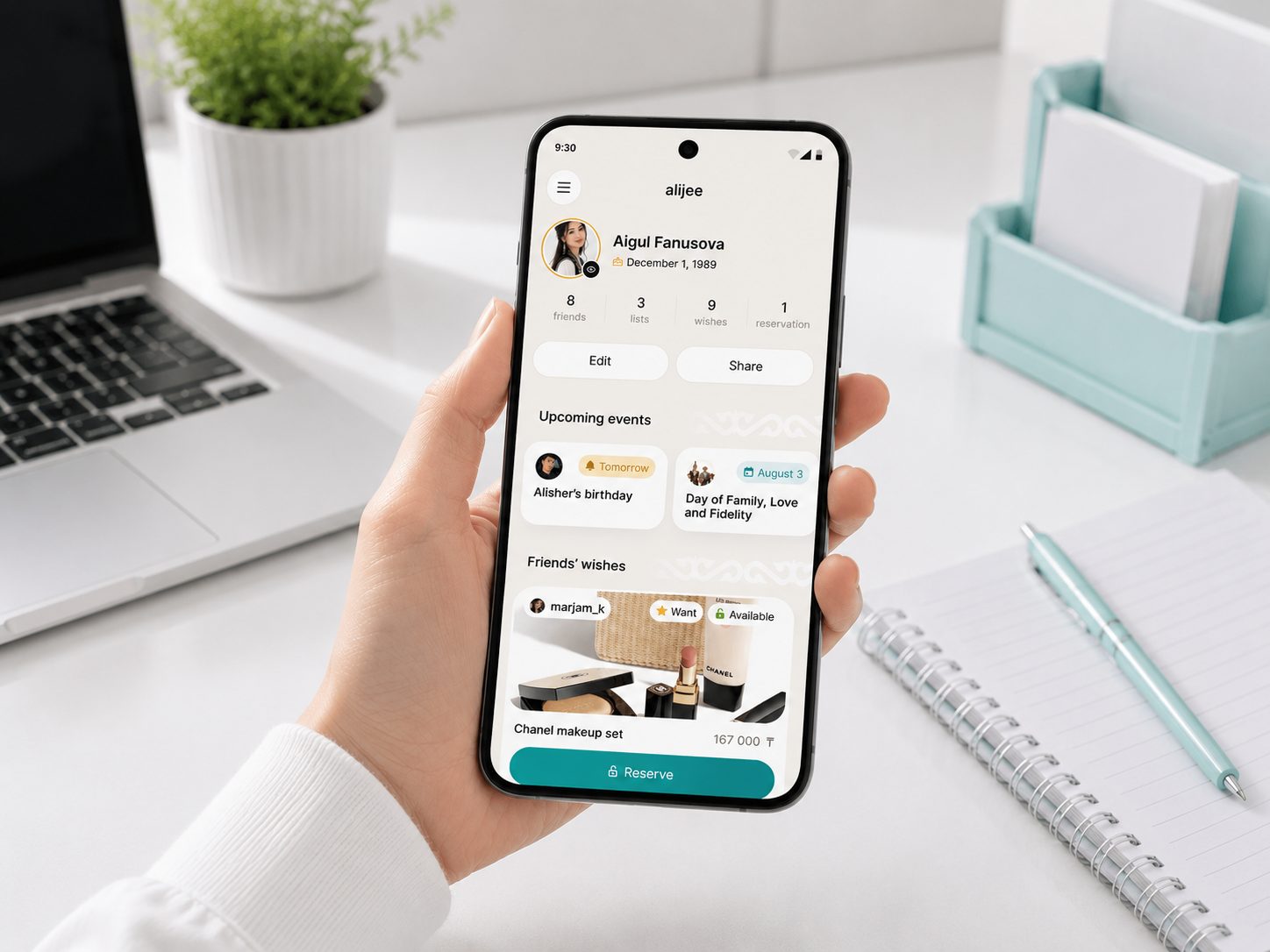
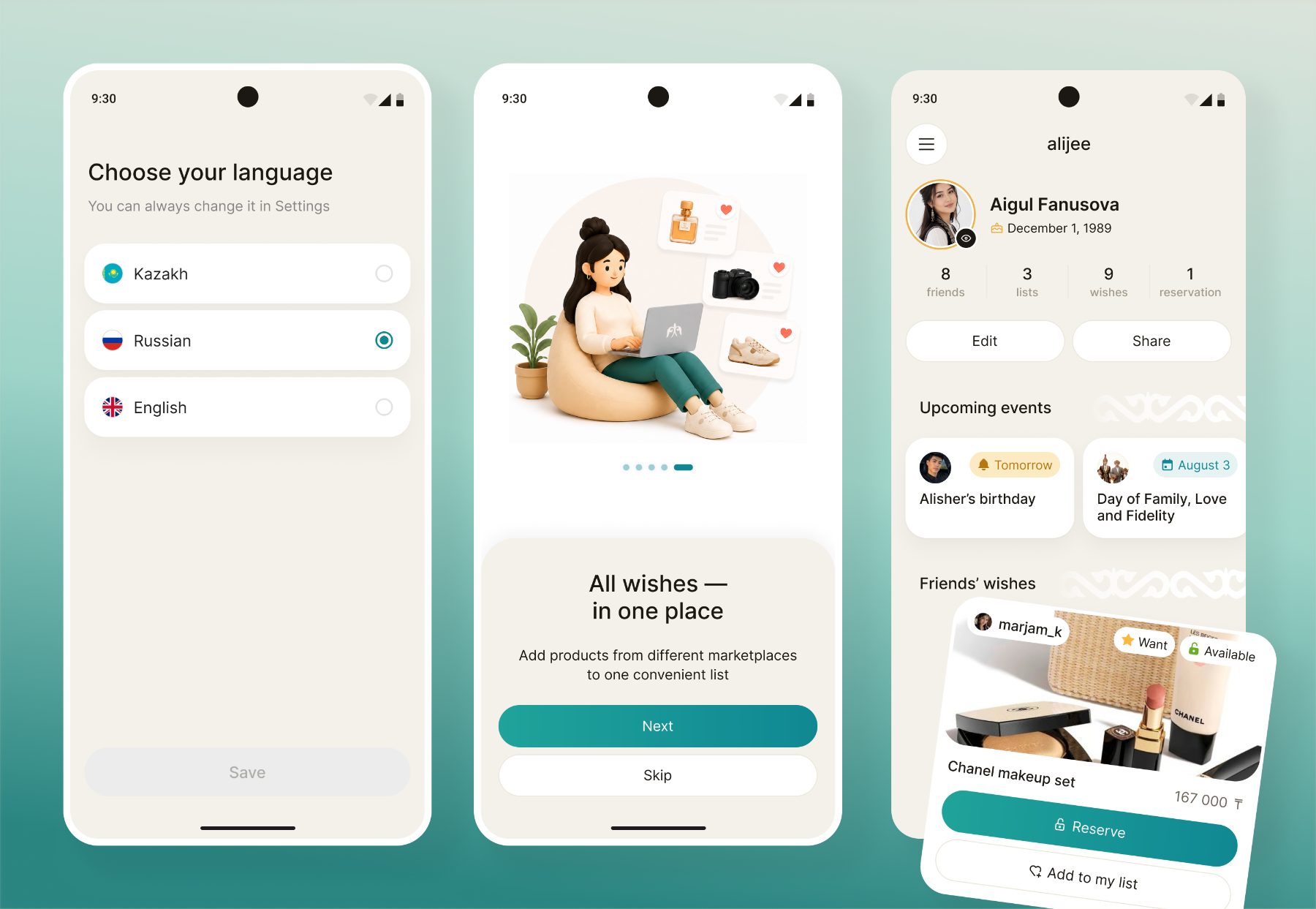
The toi_b app open on a phone: profile, upcoming events and a friend's wish ready to reserve

Context

The project reached me through my previous manager: she gave my contact to 2 founders who wanted a wishlist app for Kazakhstan and Central Asia.

The founders had a brief and nothing else. My job was to turn it into a shippable MVP: product structure, user flows, visual language and a component library.

Since there was no analyst on the project,
I occasionally took on their duties

Constraints
Nothing to build on
No existing product, no visual references, no design system
High ambiguity
The brief listed features, but left out product logic and whole user scenarios
Moving requirements
The scope kept evolving while the screens were being designed
5 weeks
One delivery window for the full MVP, handed straight to development
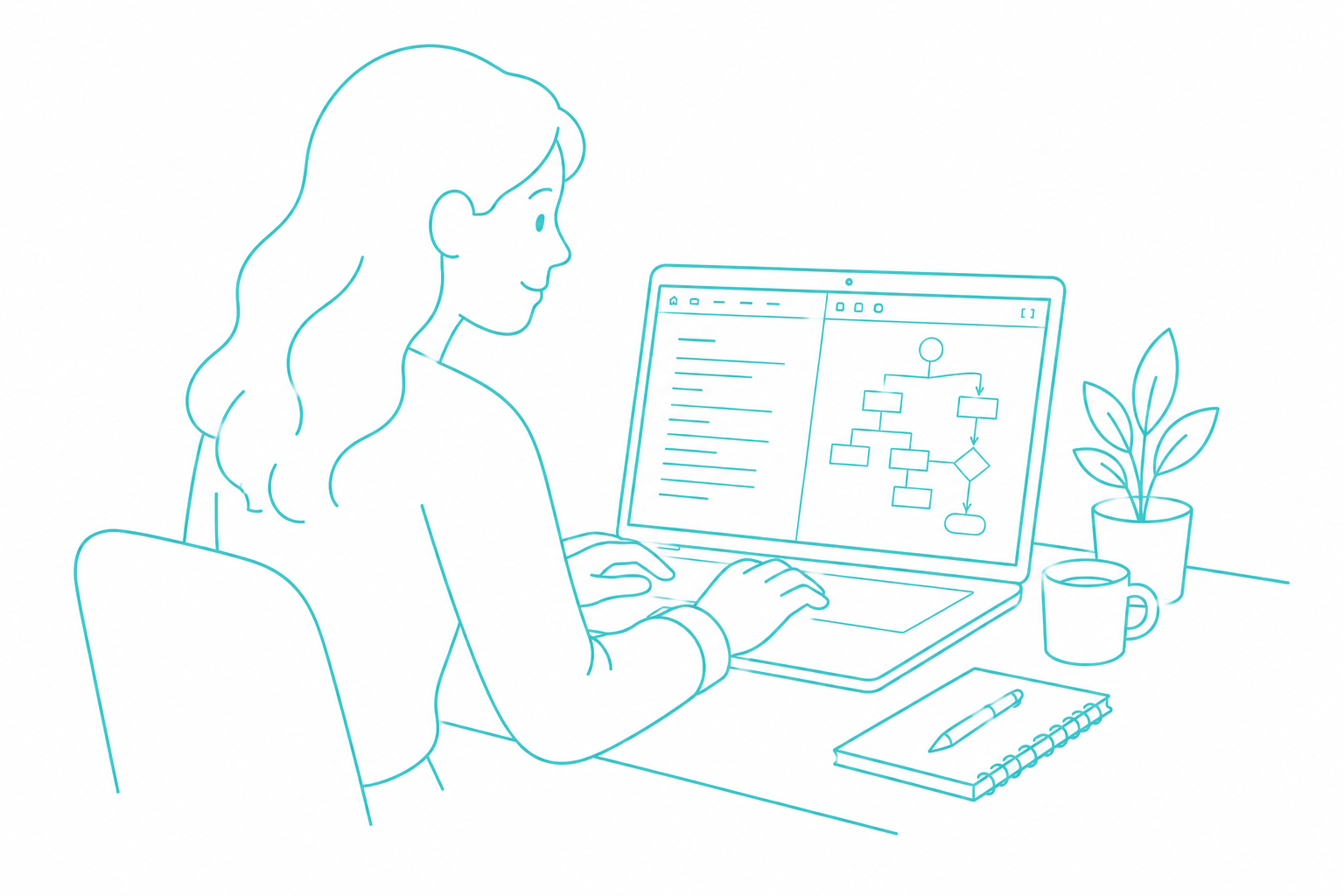
Designer at a laptop mapping the product flow next to the brief

Research

I started by studying the brief and building a single user flow out of it — every screen, every branch. Wherever the brief had gaps, I left a pink note: a question to discuss with the stakeholders. Most of them were product logic and scenarios that had simply never been written down.

Then I ran a video call with the founders and the developer, and we went through every note on the board. I recorded the answers, and the flow became the reference for the project.
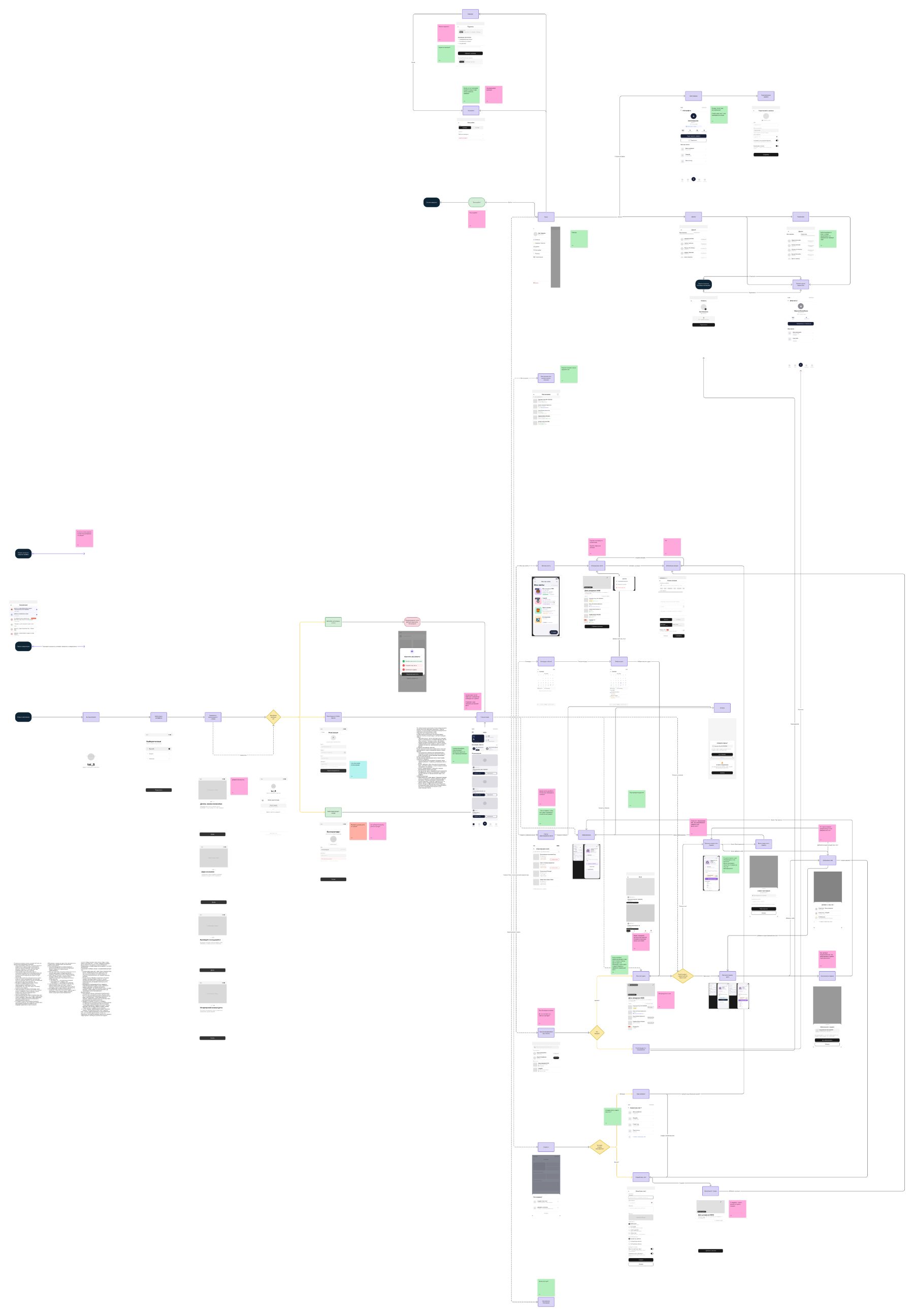
End-to-end user flow — pink notes are my questions
The complete end-to-end user flow of the toi_b app with pink question notes

Key questions I raised

The following suggestions I made changed the logic and the scope of the MVP:

1.
Profile privacy and wishlist privacy contradicted each other. A private profile could still hold public wishlists, which made the logic much heavier. I proposed 1 inheritance rule for the MVP — lists follow the profile — and the founders backed it.
2.
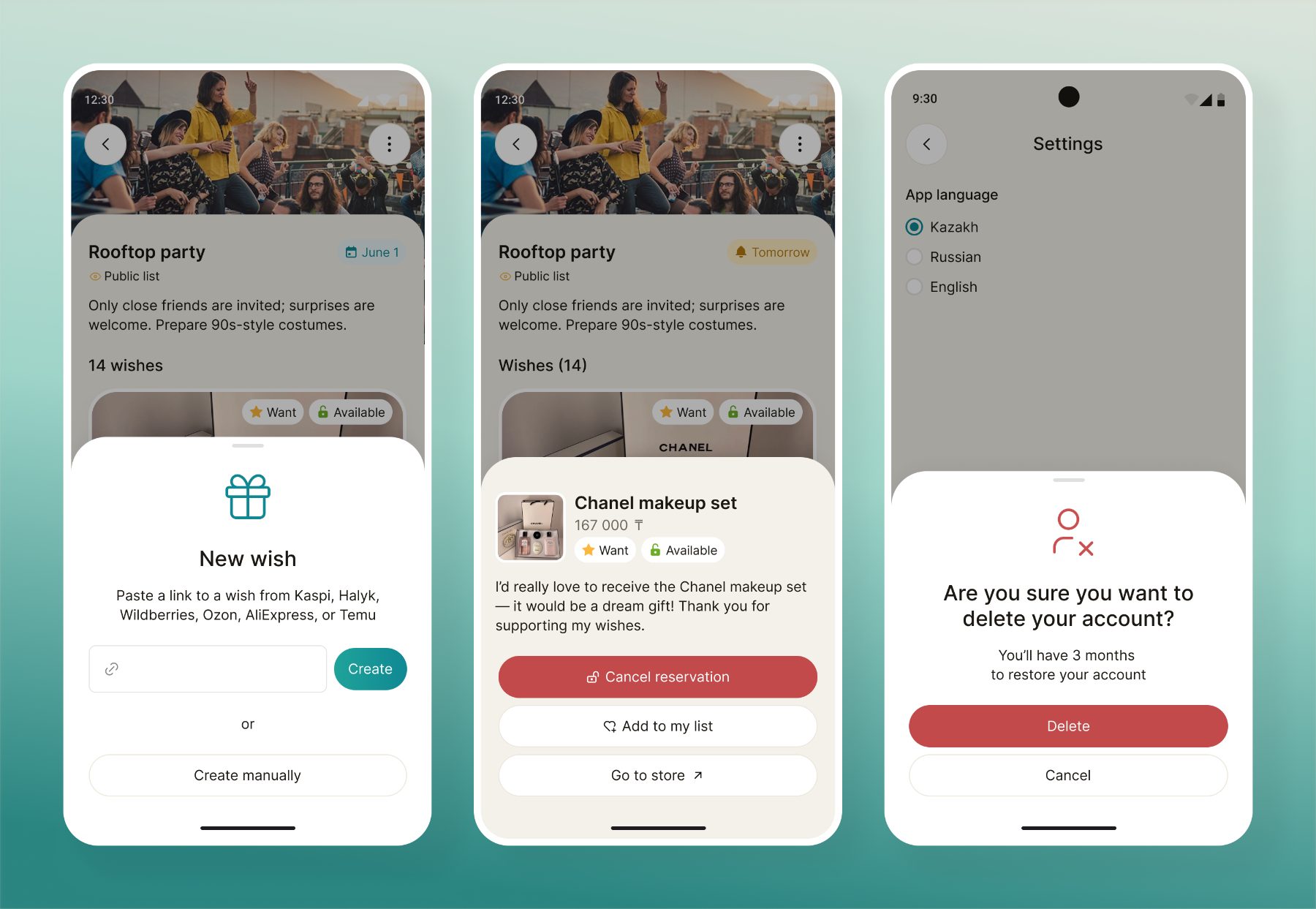
Automatic and manual gift creation had to be split apart. In the brief, both lived on one screen:
  • the screen carried 2 primary buttons, which was quite confusing;
  • the link field was easy to miss — people could skip parsing altogether and fill everything in by hand.
It created more confusion than answers, so I separated it into 2 steps.
3.
I suggested using Material Design as a foundation. Familiar Android patterns underneath, a custom identity on top, and no platform-specific solutions that would block the future iOS version.

Visual direction

The founders wanted something warm and family-oriented that quietly reads as Kazakh — without turning the interface into ornament. I built a mood board, tested palettes on real screens, and landed on warm neutrals with turquoise accents and restrained Kazakh-inspired patterns.
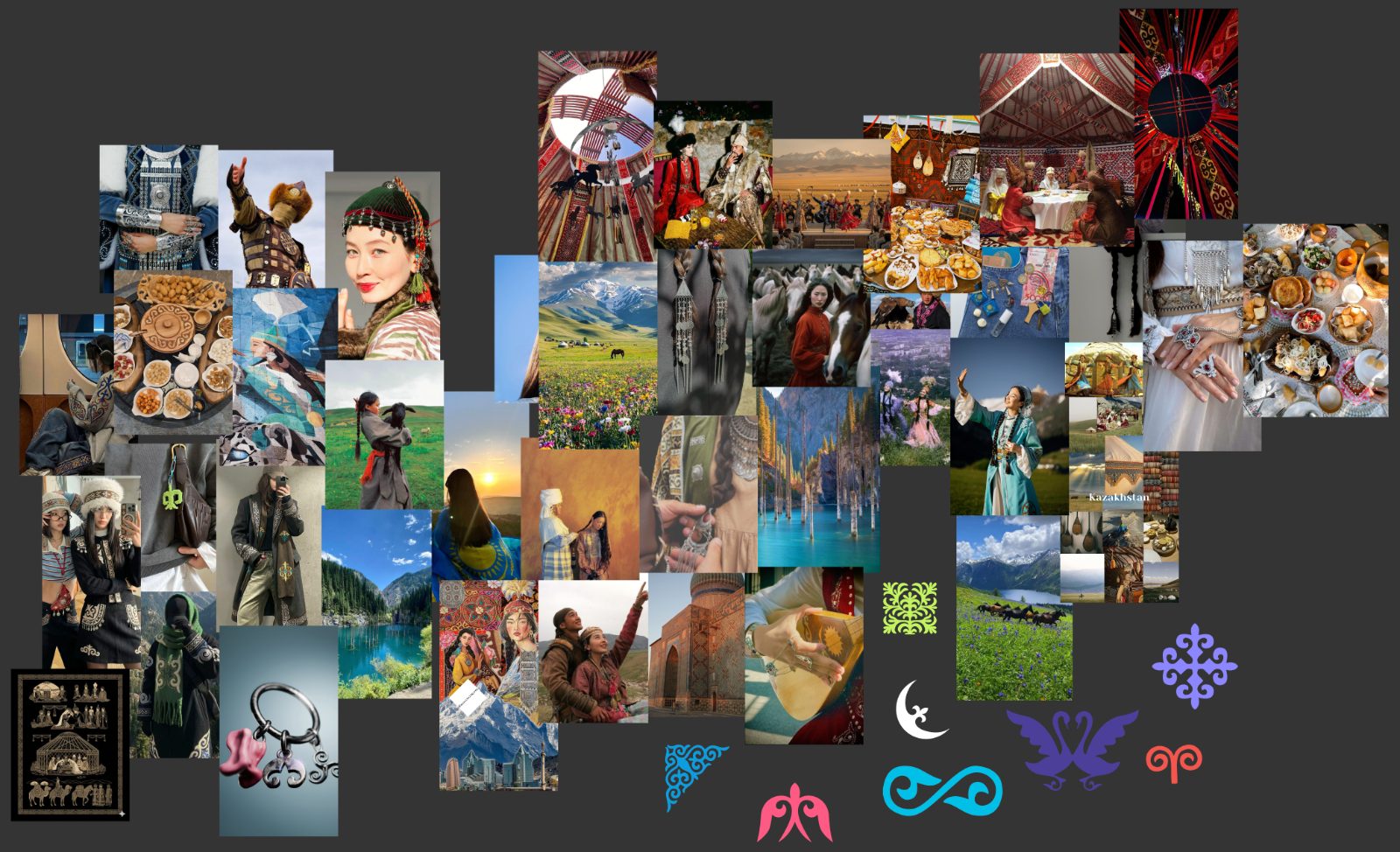
toi_b mood board with Kazakh cultural references, textures and colour cues

Delivery

1.
Throughout the project I ran weekly calls with the founders and the developer, where we worked through open questions and new requirements as they appeared.
2.
I built a component library, so changes could be applied to the mockups quickly — and so the team has a foundation to reuse for the future iOS version.
3.
Whenever I had questions about implementation or technical limitations, I took them to the developer before finalising the screens.

I delivered the full MVP within the agreed 5 weeks and handed it over to development. The founders were happy with the result — both with the visual style and with how the product logic was worked out.
{{ uiLabel }}
{{ uiCounter }}
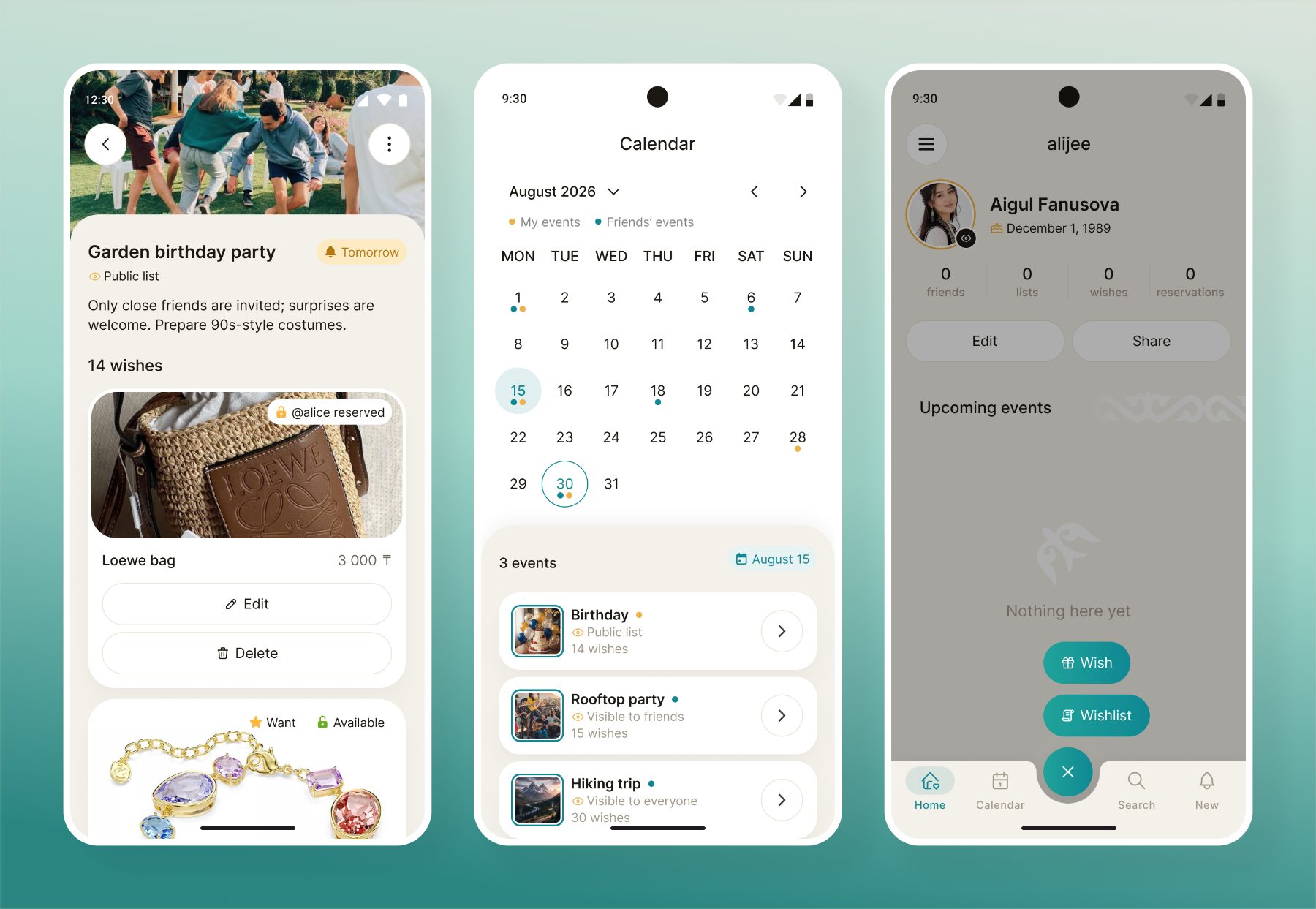
Language choice, onboarding and the home profile screen Wishlist with a reserved gift, calendar of events and an empty profile New wish sheet, reservation sheet and account deletion dialog
Impact
  1. 70+ screens and states delivered in 5 weeks — the full MVP, from onboarding to reservations and notifications, handed to development.
  2. A visual language and a reusable component library the team can keep building on.
  3. The agreed privacy model removed contradictory states and cut design time by 6%; using AI for research synthesis, documentation lookup and library organisation cut it by a further 8.5%.
−6%
design time saved by the privacy inheritance rule I proposed, which replaced contradictory states
−8.5%
design time saved by using AI for research synthesis, documentation lookup and library organisation

What I took away

When a product has no analyst, the designer sometimes has to take on their functions.

Alena Slastnikova · Product Designer Next case: Mortgage Broker →